

BY ANDY DALISAY
In a world where tides shift and industries flourish, the Associated Marine Officers’ and Seamen’s Union of the Philippines (AMOSUP) have remained a steady anchor for Filipino seafarers. As it celebrated its 65th founding anniversary, the union was hailed not just for its longevity, but for its transformative impact on maritime labor—locally and globally.
“Doesn’t matter whether there are wars, economic crises, pandemics or challenges in our industry—AMOSUP stood tall for you,” declared Stephen Cotton, General Secretary of the International Transport Workers’ Federation (ITF), in a rousing keynote address at the Hall B & C of the World Trade Center (Manila). “You’re a powerful force for change, not just here in the Philippines, but the whole world over.”
At the heart of AMOSUP’s legacy is a story of vision turned into reality. Cotton paid tribute to the late Capt. Gregorio S. Oca, the union’s founder, whose dream of building a world-class maritime academy began with a dilapidated hotel in Mariveles, Bataan.
“I have a lovely story,” Cotton recalled. “He came to see me once and said, ‘I want to buy a dilapidated hotel because I have a vision to build the best maritime school—not just in the Philippines, but in the world.’ And that’s now MAAP.”
Today, the Maritime Academy of Asia and the Pacific stands as a premier institution, offering integrated training for deck, engine and leadership roles. It is a living testament to Captain Oca’s belief in education as the bedrock of seafarer empowerment.
Expanding the circle of care
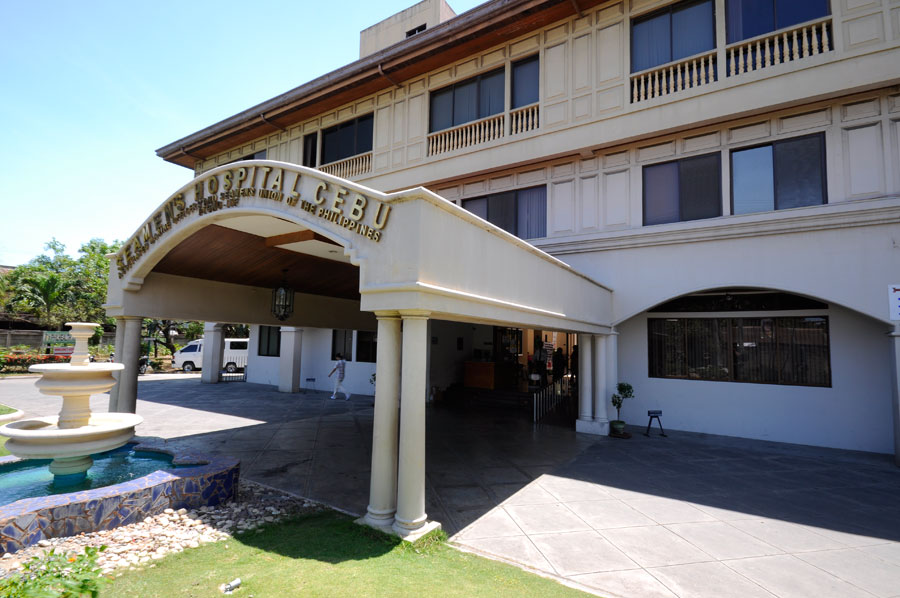
AMOSUP’s commitment to its members extends far beyond training. Now under the leadership of Dr. Conrado F. Oca, the founder’s son and current president, the union has expanded its network of hospitals and medical outreach centers across the country.
“As we saw during the trip around the Philippines,” Cotton noted, “there’s more AMOSUP hospitals, more medical outreach centers, better union benefits. MAAP is even bigger than ever imagined.”
These services are not mere amenities—they are lifelines for over 120,000 active Filipino seafarers and their families, ensuring health, dignity and continuity of care.
Filipino seafarers remain the backbone of the global shipping industry, and AMOSUP their most formidable advocate. “You are natural seafarers,” Cotton said. “But you’re also wonderful human beings—so warm, so welcoming. That’s why you’re the biggest labor supply country in the world.”
AMOSUP’s influence is felt in international negotiations, from the Maritime Labour Convention to the International Bargaining Forum. Cotton emphasized the importance of partnerships: “There’s no dance without the employers. They’re the ones that engage with us to build better futures for you.”
Looking ahead: Training, technology and welfare
As the maritime sector faces new challenges—from alternative fuels to digitalization—AMOSUP is positioning its members for the future. “We have to make sure we train Filipinos to the highest possible standard,” Cotton urged. “We have to make sure the life you live on board is safe, has value and that we do more to protect your welfare.”
He also called for greater access to internet connectivity and the preservation of shore leave rights—essentials for mental health and family connection.
Cotton’s message culminated in a heartfelt tribute to the people behind AMOSUP’s success. “Whichever part of the AMOSUP machinery—whether you’re the president, whether you work in the training center—all of you, please stand up,” he said. “These are the people that work every day for the seafarers in this room.”
He reserved special praise for Dr. Oca: “Conrad, your father would be immensely proud of you. You walk in his shadow and now you illuminate the whole world with what you’ve built.”
But above all, Cotton reminded the audience that AMOSUP’s true strength lies in its members. “Without the seafarers, there’s no AMOSUP,” he said. “This is what it’s all about—your jobs, your conditions, your families.”As AMOSUP sails into its next chapter, its compass remains steady: a commitment to unity, dignity and the enduring welfare of the Filipino seafarer.SF